Customer Portal


Delivering Trusted Service Since 1951
Water Softener Services in Raleigh, Fayetteville & Surrounding Areas
Hard water can leave stubborn mineral deposits on faucets, shorten appliance life, and make everyday cleaning more difficult. Water hardness varies across Raleigh, Fayetteville, and nearby North Carolina communities, making proper testing essential before choosing a treatment system. Blanton’s Air, Plumbing & Electric provides water softener services to help homeowners reduce mineral buildup and protect their plumbing equipment.
Call or contact us online to schedule a water softener consultation with Blanton’s Air, Plumbing & Electric.
Signs Your Home Could Benefit From Water Softener Services
Dissolved calcium and magnesium can accumulate inside plumbing fixtures and water-using appliances. Recognizing these signs can help you determine when professional water hardness testing is appropriate.
- White mineral deposits Chalky residue repeatedly develops around faucets, showerheads, and sink drains.
- Stubborn soap residue Soap and detergent leave films on shower surfaces, dishes, or laundry.
- Reduced appliance efficiency Mineral scale accumulates inside water heaters and other appliances that use heated water.
- Frequent fixture cleaning Faucets and showerheads require repeated descaling to maintain their appearance and performance.
- Water spots on dishes Glassware and silverware develop cloudy spots after washing and drying.
These symptoms can have several causes, so testing water hardness is the best way to determine whether a softener would help.
Professional Water Softener Services
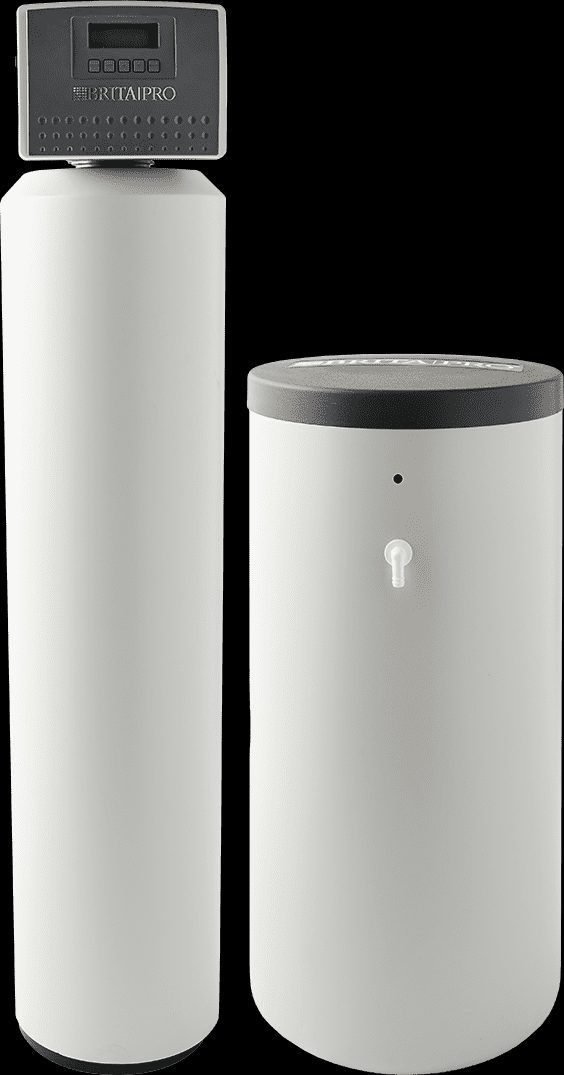
Blanton’s Air, Plumbing & Electric helps homeowners address hard water through professional testing and appropriate treatment recommendations. Water softeners primarily remove dissolved calcium and magnesium, the minerals responsible for hardness and scale formation.
Most conventional water softeners use an ion-exchange process. Water passes through a resin bed that exchanges hardness minerals for sodium or potassium ions. The system periodically regenerates the resin using a salt solution, allowing it to continue treating incoming water.
Our approach begins with understanding your home’s water conditions, plumbing configuration, and daily water consumption. Blanton’s broader water treatment services include professional water quality evaluations that help determine which treatment methods match your household’s needs.
Water Hardness Testing and System Selection
Before recommending a water softener, a plumber can evaluate the hardness level of your incoming water supply. Hardness is commonly measured in grains per gallon or milligrams per liter as calcium carbonate.
Testing helps determine whether softening is necessary and how much treatment capacity your household requires. A home’s number of occupants, daily water consumption, and peak flow demand all influence equipment selection.
An appropriately sized softener should deliver sufficient treated water without excessive regeneration cycles or unnecessary salt consumption. Your plumber can explain available configurations and recommend equipment suited to your home’s plumbing layout.
Water Softener Installation
Proper installation affects how well a water softener performs throughout its operating life. A typical whole-home softener connects to the main incoming water line, allowing water to be treated before it reaches household fixtures and appliances.
Installation planning involves evaluating available space, water pressure, plumbing connections, drainage requirements, and access for routine servicing. Many systems also include a bypass valve that allows water to flow through the plumbing while the softener is being serviced.
After installation, the system must be programmed according to water hardness, resin capacity, and household water usage. The installer can verify connections, check for leaks, and explain how regeneration works.
Water Softener Maintenance and Troubleshooting
Water softeners require occasional attention to maintain consistent performance. Salt levels, regeneration settings, and the condition of internal components can affect how effectively a system removes hardness minerals.
Common maintenance concerns include salt bridging inside the brine tank, blocked injectors, resin fouling, and malfunctioning control valves. These problems may cause hard water to return even when the softener appears to operate normally.
If your existing system stops producing softened water, Blanton’s can help assess the condition of your equipment and determine appropriate next steps. A professional evaluation can establish whether servicing, component repairs, or replacement should be considered.
Protecting Plumbing and Water-Using Appliances
Hard water minerals can accumulate on heating surfaces, inside fixtures, and along plumbing components. As deposits increase, appliances may require more energy or maintenance to operate effectively.
Softened water can reduce new scale formation and help preserve the performance of water heaters, dishwashers, washing machines, and other connected equipment.
Water softening also improves soap performance by reducing interference from dissolved hardness minerals. This can make rinsing easier and limit the residue left on bathroom surfaces and dishes.
Happy Customers Choose...
Why Choose Blanton’s for Water Softener Services?
Blanton’s Air, Plumbing & Electric has served North Carolina homeowners since 1951. Our licensed plumbers evaluate water quality and household plumbing conditions before recommending treatment equipment, helping you make an informed decision about your home’s needs.
We provide upfront pricing and appointment notifications, including a 30-minute arrival update. Eligible homeowners can also explore financing options through GoodLeap for qualifying home improvement projects.
Call or contact us online today to schedule water softener services in Raleigh, Fayetteville, or a surrounding community.
How Can We Help?