0% No Interest Financing*


Delivering Trusted Service Since 1951
Back to Blog
Adding a New Breaker to Your Electrical Panel

Happy Customers Choose...
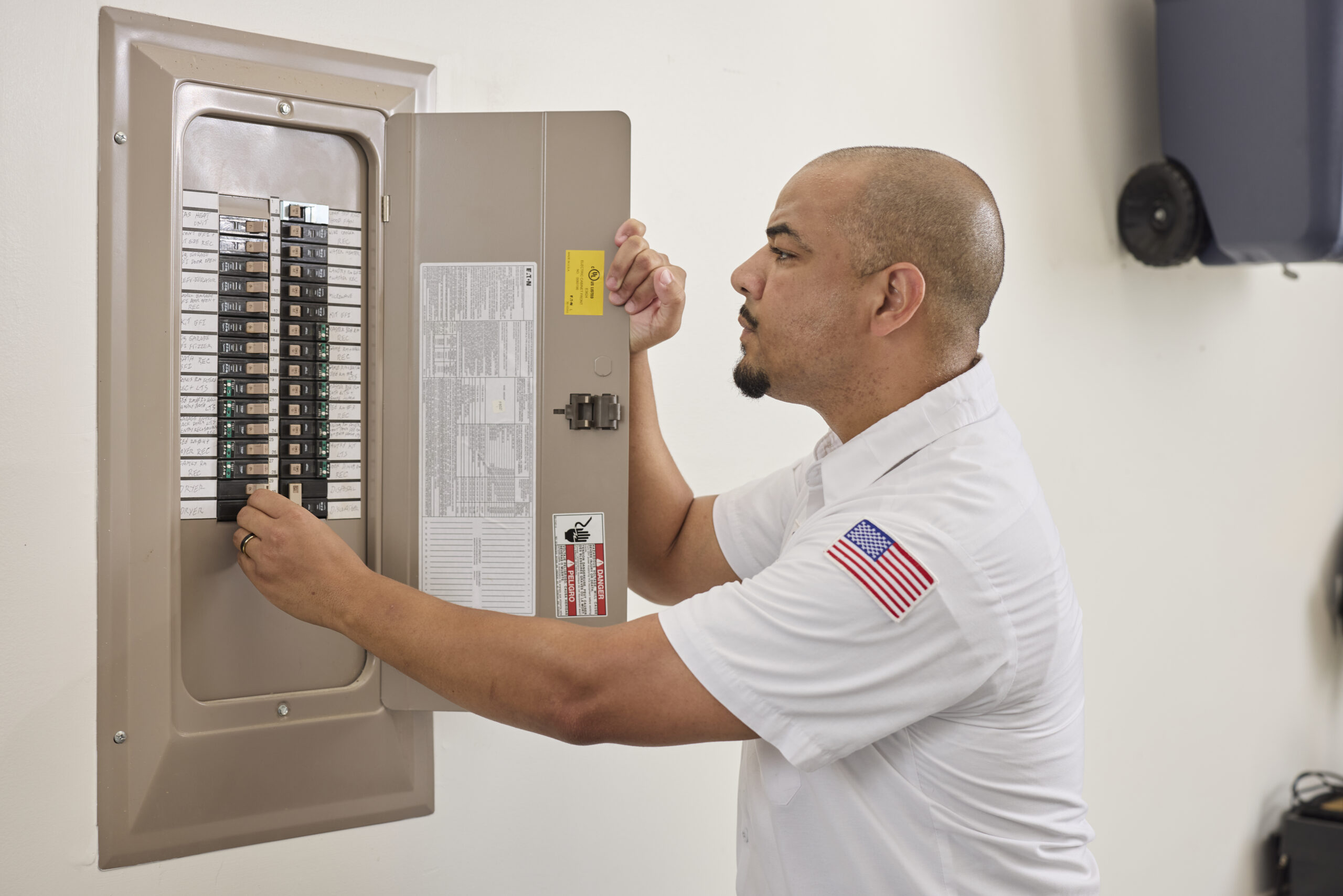
You can add a new breaker to an electrical panel only if the panel has open space, enough electrical capacity, properly sized wiring, and code-compliant grounding. Because breaker installation involves shock and fire risks, load calculations, and North Carolina electrical code requirements, homeowners in Fayetteville, Raleigh, and the Triangle should call a licensed electrician rather than attempt this work themselves.
Your electrical panel controls how power is distributed throughout your home. As your electrical needs grow, you may need a new circuit and breaker for a renovation, an appliance, an EV charger, a workshop, or an overloaded area of the house.
In this guide, we will explain when a new breaker may be needed, what an electrician checks before adding one, why DIY panel work is dangerous, and when Fayetteville, Raleigh, and Triangle homeowners should schedule professional electrical service.
What Does a Circuit Breaker Do?
A circuit breaker is a safety device inside your electrical panel. It helps protect your home by shutting off power when a circuit draws too much electricity or experiences a fault.
A circuit breaker helps protect against:
- Overloaded circuits
- Overheating wires
- Electrical fires
- Short circuits
- Faulty appliances
- Damaged wiring
- Power surges on a circuit
When a breaker trips, it is doing its job. However, frequent tripping is not normal and should be inspected by a professional electrician.
When Do You Need to Add a Breaker to Your Panel?
You may need to add a breaker when your home needs a new dedicated circuit or when existing circuits can no longer safely handle the electrical demand.
Common reasons to add a breaker include:
- Home additions: New bedrooms, bathrooms, garages, bonus rooms, or outdoor spaces may need additional circuits.
- Kitchen or laundry upgrades: New ovens, microwaves, dishwashers, dryers, or laundry equipment may require dedicated circuits.
- HVAC equipment: Some heating and cooling systems need their own properly rated breaker.
- EV charger installation: Many electric vehicle chargers require a dedicated circuit and breaker.
- Tankless water heaters: Some electric models require significant electrical capacity and dedicated circuits.
- Workshop or garage equipment: Power tools, compressors, and specialty equipment may need separate circuits.
- Outdoor electrical needs: Pools, spas, outdoor kitchens, sheds, and landscape lighting may require dedicated circuits.
- Frequent breaker trips: Repeated trips may indicate an overloaded circuit or a deeper electrical issue.
- Code or inspection requirements: A home inspection may identify circuits that need updating or separation.
Adding a breaker is not just about finding an open slot. The panel must also be able to safely support the additional electrical load.
Can Every Electrical Panel Accept a New Breaker?
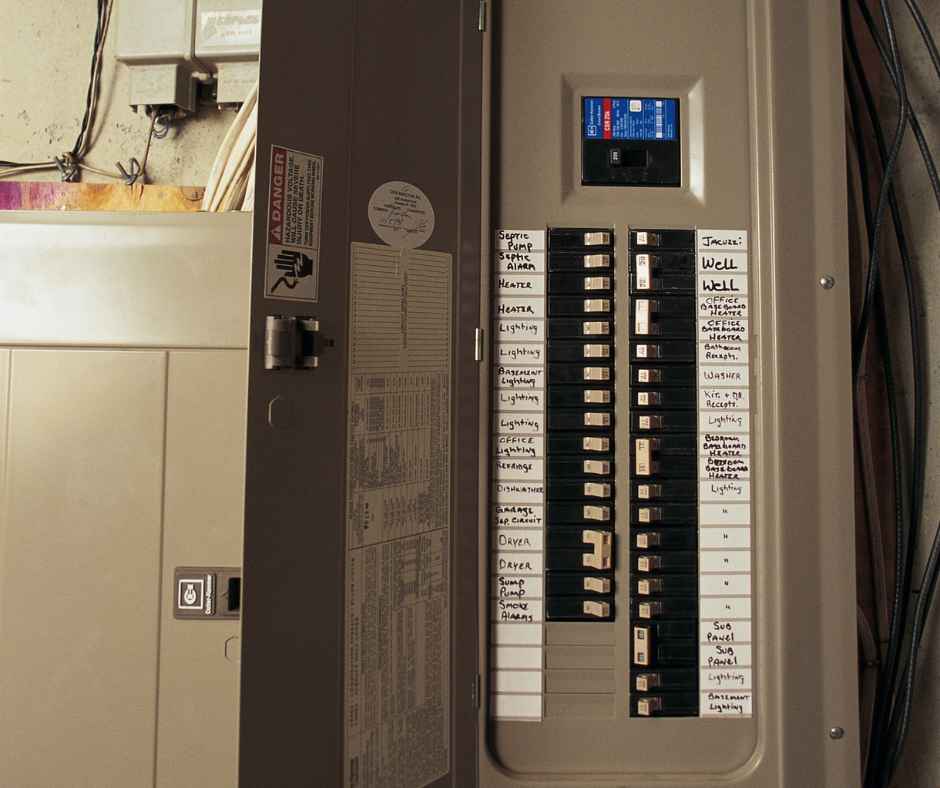
No, not every electrical panel can safely accept a new breaker. Some panels are full, outdated, undersized, damaged, or not designed to accept certain breaker types.
An electrician will check:
- Whether the panel has open breaker spaces
- Whether the panel has enough amperage capacity
- Whether the panel is rated for the added load
- Whether the panel allows tandem breakers
- Whether the existing breakers are compatible
- Whether the bus bar is in safe condition
- Whether the panel shows signs of overheating
- Whether the panel is outdated or unsafe
- Whether a subpanel or panel upgrade is needed
If your panel is already at capacity, adding a breaker may not be safe. In that case, a panel upgrade or subpanel may be the better option.
What Does an Electrician Check Before Adding a Breaker?
Before adding a breaker, a licensed electrician should inspect both the panel and the circuit requirements. This helps confirm that the installation will be safe, reliable, and code-compliant.
An electrician may check:
- Current panel capacity
- Available breaker slots
- Service amperage
- Load calculation requirements
- Breaker compatibility
- Wire size and insulation type
- Grounding and bonding
- Circuit purpose
- Appliance or equipment requirements
- GFCI or AFCI protection needs
- Local permit requirements
- North Carolina electrical code compliance
- Whether the panel needs repair, replacement, or expansion
This inspection helps prevent overloaded circuits, nuisance tripping, overheating, and fire hazards.
Should You Add a Breaker Yourself?
No, homeowners should not add a breaker themselves. Electrical panel work can expose you to live components even when individual breakers are turned off. A mistake can cause electrical shock, equipment damage, code violations, or a house fire.
DIY breaker installation is risky because:
- Electrical panels may contain live power.
- The wrong breaker type may not properly protect the circuit.
- Incorrect wire sizing can cause overheating.
- Loose connections can create arcing and fire hazards.
- Improper grounding can create shock risks.
- Code requirements can vary by circuit type and location.
- Some work may require permits or inspections.
- Mistakes can affect insurance, resale inspections, and home safety.
A licensed electrician has the training, tools, and code knowledge to complete the work safely.
What Are the Signs Your Electrical Panel Is Overloaded?
An overloaded panel or circuit can create serious safety concerns. If your home shows signs of electrical stress, do not ignore them.
Signs of a possible overload include:
- Breakers trip frequently
- Lights flicker or dim
- Buzzing sounds from the panel
- Warm or hot breakers
- Burning smells near outlets or the panel
- Discolored outlets or switches
- Appliances lose power unexpectedly
- Extension cords are used as a permanent wiring
- Multiple rooms lose power at once
- The panel feels hot to the touch
If you notice burning odors, heat, buzzing, sparks, or repeated power loss, schedule electrical service right away.
Do Older Homes in Fayetteville and Raleigh Need Panel Upgrades?
Many older homes in Fayetteville, Raleigh, and surrounding Triangle communities were not built for today’s electrical demand. Modern households often use more power for HVAC systems, home offices, smart devices, entertainment systems, kitchen appliances, and EV chargers.
An older home may need a panel upgrade if:
- The panel is full
- The home still has outdated wiring
- Breakers trip often
- The panel is rated below current household needs
- You are adding major appliances
- You are installing an EV charger
- You are finishing a garage, attic, or addition
- The panel shows rust, heat damage, or corrosion
- You need more dedicated circuits
- An inspection identifies safety concerns
Blanton’s licensed electricians handle electrical repairs and upgrades in Fayetteville and are familiar with local building codes and permit requirements.
Do You Need a New Breaker or a Full Panel Upgrade?
A new breaker may be enough if your panel has available space and enough capacity for the added circuit. A full panel upgrade may be needed if the current panel is outdated, overloaded, damaged, or too small for your home’s electrical needs.
A new breaker may be enough if:
- The panel has available space
- The panel has sufficient amperage capacity
- The new circuit is small or moderate in demand
- The wiring can be safely installed
- The panel is in good condition
- The installation meets code
A panel upgrade may be better if:
- The panel is full
- The panel is outdated or unsafe
- You need several new circuits
- You are adding high-demand equipment
- The service amperage is too low
- The panel shows signs of overheating
- Breakers trip frequently
- Your home has major electrical upgrades planned
An electrician can perform a load calculation and recommend the safest option.
What Breaker Size Do You Need?
Breaker size depends on the circuit, wire size, equipment requirements, and electrical code. Bigger is not better. A breaker that is too large for the wiring can allow the wires to overheat before the breaker trips.
Breaker size may depend on:
- Appliance or equipment load
- Wire gauge
- Circuit voltage
- Continuous load requirements
- Manufacturer specifications
- Dedicated circuit requirements
- GFCI or AFCI protection needs
- Local code requirements
A licensed electrician should determine the correct breaker size and circuit design.
What Is the Difference Between a New Breaker and a New Circuit?
A new breaker is only one part of a new circuit. The breaker protects the circuit, but the full circuit includes the wiring, outlets, switches, fixtures, grounding, and connected equipment.
A new circuit may include:
- A properly rated breaker
- Correctly sized wiring
- Grounding and bonding
- Junction boxes
- Outlets or switches
- Dedicated appliance connections
- GFCI or AFCI protection where required
- Labels inside the electrical panel
If you are adding power to a new room, appliance, charger, or outdoor area, you likely need a complete new circuit, not just a breaker.
Who Installs New Breakers in Fayetteville, Raleigh, and the Triangle?
Blanton’s Air, Plumbing & Electric provides electrical services for homeowners in Fayetteville, Raleigh, and nearby Triangle communities. Their electrical services include repairs, upgrades, generators, breaker issues, panel work, and emergency electrical repairs.
Call a professional electrician if you need help with:
- Adding a new breaker
- Installing a dedicated circuit
- Troubleshooting frequent breaker trips
- Upgrading an electrical panel
- Installing an EV charger circuit
- Adding circuits for appliances
- Repairing overloaded circuits
- Inspecting an older electrical panel
- Correcting code or inspection issues
- Emergency electrical repairs
Schedule Electrical Panel Service With Blanton’s Today
Adding a new breaker is not a DIY project. Your panel must have the right capacity, the circuit must be properly designed, and every connection must be installed safely. Professional service protects your home, your family, and your electrical system.
Contact Blanton’s Air, Plumbing & Electric today to schedule electrical panel service in Fayetteville, Raleigh, or the Triangle. Their licensed North Carolina electricians can inspect your panel, determine whether a new breaker or panel upgrade is needed, and complete the work safely and correctly.
How Can We Help?

Recent Posts


Don’t Settle For Less
Make Blanton’s Your First Call!
We make the process easy in multiple ways but you can always expect the same, easy way when you work with us:
Ready for what’s next?
How Can We Help?
Get Your service with a Wow!
Our Extraordinary Service Plan features maintenance, Service, & Support for Your Home
- Annual HVAC tune-up and inspection
- Annual water heater inspection
- Annual electrical safety inspection
- No extra charge for Saturday service
- All repairs backed by a one-year warranty
- Exclusive members-only savings
- Priority service and dedicated support line
Learn More