Customer Portal


Delivering Trusted Service Since 1951
Back to Blog
Is Your Federal Pacific Panel a Fire Hazard? The 2026 Homeowner’s Guide to FPE Stab-Lok Safety

Happy Customers Choose...
If you own an older home in North Carolina, you might have recently encountered a name that carries a lot of weight in the electrical industry: Federal Pacific Electric (FPE).
Installed in millions of homes built between 1950 and 1980, these panels were once the industry standard. However, the legacy of FPE changed forever in the early 1980s. Following investigations into fraudulent testing practices, FPE panels lost their UL (Underwriters Laboratories) Listing. This effectively banned their manufacture or sale, as they could no longer be certified safe for residential use.
Today, perhaps a home inspector flagged it during a recent sale, or your insurance agent told you that your policy renewal depends on a replacement. For many homeowners, this news comes as a shock. The panel has likely sat in your garage or utility closet for decades without a single flicker. However, FPE panels are unique: they do not typically fail with a loud bang. Instead, they fail by staying silent when they should be screaming.
In this blog, we will explain how to identify if your home has a Federal Pacific panel, the specific failure points that led to a massive class-action lawsuit, why North Carolina insurance carriers and home inspectors flag these units, and what a modern panel replacement looks like for your home.
The Quick Verdict: Is an FPE Panel Safe?
No. Independent forensic testing has shown that Federal Pacific Stab-Lok circuit breakers fail to trip at a rate as high as 60%. This means they do not shut off power during an electrical overload. Because they often appear to work perfectly until the moment they are needed to prevent a fire, most insurance carriers in North Carolina now flag these panels as an unacceptable risk. In 2026, replacement is often required for policy eligibility.
How to Identify a Federal Pacific Panel in Your Home
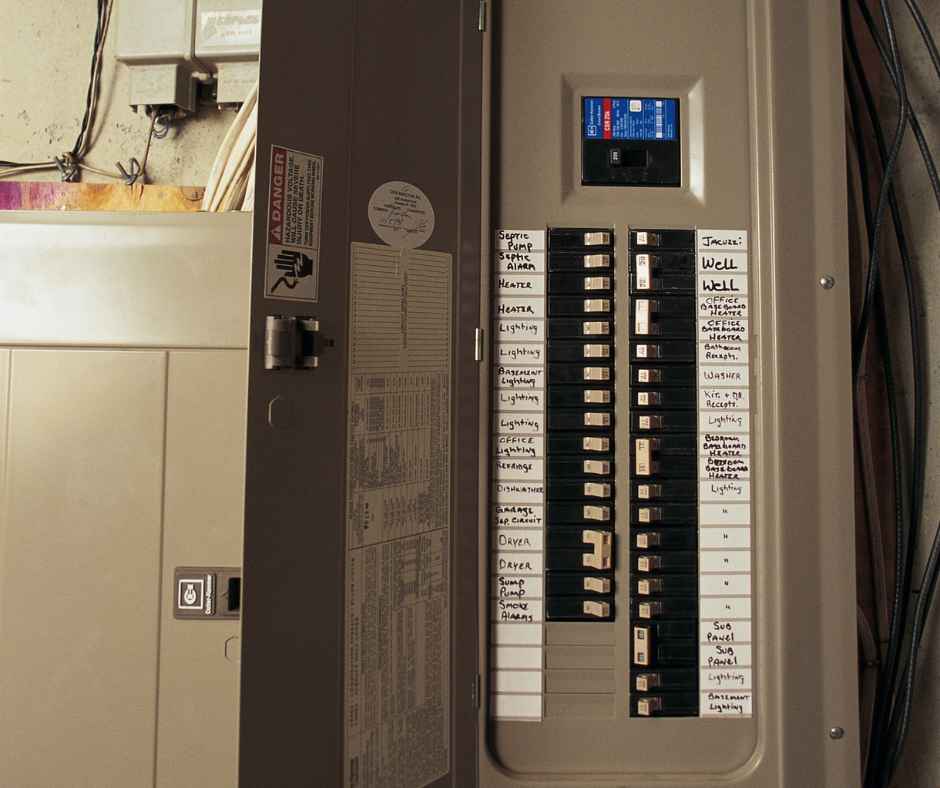
Before diving into the history of these units, you need to know if this specific issue applies to your property. You do not need to be a licensed electrician to spot a Federal Pacific Electric (FPE) panel. Identification is often as simple as looking for a few specific visual markers on the exterior or just inside the panel door.
To confirm if your home is equipped with one of these units, look for the following characteristics:
- The Brand Name: Inspect the front cover of the metal box for the “Federal Pacific Electric” name or the “FPE” acronym. This is often embossed directly into the metal or printed on a large sticker on the inside of the door.
- The “Stab-Lok” Label: Most hazardous FPE panels are part of the Stab-Lok product line. Look for this specific trademarked name printed on the inside of the panel or on the breakers themselves.
- Signature Breaker Colors: One of the easiest ways to identify these units is the color of the breaker toggles. FPE breakers are famous for having bright orange or red handles. In contrast, modern, safe breakers are almost universally black or gray.
- The Corporate Logo: Check for a stylized letter “F” enclosed within a circle. This logo is frequently found on individual breakers or on the panel’s technical data plate.
If you find these markers in your home, it is a clear sign that your electrical system is using outdated and potentially dangerous technology.
The Documented Hazards: Why Stab-Lok Panels Are Different
Most homeowners assume that if a circuit breaker is in the “on” position, the house is safe. However, the Federal Pacific Stab-Lok design has a fundamental flaw. These breakers are notorious for a condition called “failing to trip.”
In a modern electrical system, a breaker acts like a safety valve. If a circuit becomes overloaded or a short occurs, the breaker flips to the “off” position to stop the flow of electricity. This prevents wires from overheating and catching fire. With an FPE panel, that safety valve often jams. Even when a dangerous amount of electricity is surging through your walls, the breaker remains on. This allows the wires to heat up to hazardous temperatures. At these levels, the electricity can ignite the surrounding wood, dust, or insulation.
The CPSC Investigation and Findings
The U.S. Consumer Product Safety Commission (CPSC) launched an investigation into Federal Pacific Electric in the early 1980s. Their tests confirmed that these breakers failed to meet safety standards. In fact, some of the tests showed that certain breakers failed to trip more than 50 percent of the time.
The investigation was eventually closed in 1983 without a formal federal recall. This was not because the panels were deemed safe. Instead, the CPSC stated that it lacked the budget and data to continue the massive legal battle required to force a recall at that time. This lack of a formal recall often confuses homeowners today. However, the safety risks remain well-documented by independent forensic engineers and safety experts.
The 2005 Fraud Ruling
A critical piece of evidence regarding FPE panels came decades later. In 2005, a New Jersey State Court ruled that Federal Pacific Electric had committed consumer fraud. The court found that the company knowingly distributed breakers that did not meet Underwriters Laboratories (UL) standards. The company had effectively cheated on the testing process to make it appear that their products were safer than they actually were. This ruling confirmed what many electricians had suspected for years: these panels were never as safe as the manufacturer claimed.
The North Carolina Reality: Insurance and Inspections
In North Carolina, the presence of a Federal Pacific panel is more than just a safety concern. It is a significant hurdle for homeowners. If you are in the middle of a real estate transaction or seeking to renew your home insurance policy in 2026, you will likely encounter these challenges.
Why Home Inspectors Flag FPE Panels
The North Carolina Home Inspector Licensure Board has clear standards for reporting. While an inspector is not required to perform an invasive test on every breaker, they are trained to identify known hazardous brands. In most North Carolina home inspections, an FPE Stab-Lok panel will be flagged as a major safety concern. This report often leads buyers to request a full panel replacement before they agree to close on the home.
The Insurance Roadblock
Many major insurance carriers in the Raleigh and Fayetteville areas have tightened their underwriting rules regarding electrical systems. Today, many providers view FPE panels as an unacceptable risk. If an inspector identifies one of these units during a four-point inspection, your insurance company may:
- Deny your application for a new policy.
- Cancel your existing coverage until the panel is replaced.
- Require a higher premium to account for the increased fire risk.
Securing affordable coverage often depends on having a modern, safe electrical panel installed by a licensed professional.
What Replacement Looks Like and What to Expect
Replacing an electrical panel is a significant project, but it is a routine task for an experienced electrician. Understanding the process can help take the stress out of the upgrade.
The Step-by-Step Process
When you schedule a replacement with a professional, you can expect the following timeline:
- The Assessment: An electrician will evaluate your current system to see if your wiring and grounding also need updates to meet 2026 safety codes.
- Permits and Coordination: Your contractor will pull the required local permits and coordinate with your utility provider, such as Duke Energy or PWC, to temporarily disconnect your power.
- The Installation: The old FPE box is removed, and a new, high-quality panel is installed. This usually takes between four and eight hours. During this time, your home will not have power.
- Final Inspection: A local building inspector will visit your home to verify that the work meets all current North Carolina electrical codes.
The Silver Lining: Capacity for the Future
A panel replacement is also an opportunity to prepare your home for the future. Many older FPE panels were only rated for 100 amps of service. Modern homes often require 200 amps to safely power electric vehicle chargers, high-efficiency heat pumps, and modern kitchen appliances. Upgrading your panel now ensures your home can handle these demands while staying safe.
Upgrading your electrical system is about more than just checking a box for an insurance provider or a home inspector. It is about the long-term protection of your property and the people inside it. By replacing an FPE Stab-Lok panel with a modern, code-compliant alternative, you eliminate a hidden hazard and ensure your home is ready for future electrical demands.
Take the Next Step Toward a Safer Home
Do not wait for a flickering light or a tripped breaker to find out if your home is at risk. If you have spotted an FPE logo or those signature orange toggles in your garage, the time to act is now. Our licensed electricians specialize in identifying hazardous panels and providing seamless, code-compliant upgrades that satisfy insurance requirements and protect your family.
Schedule your professional electrical safety inspection with Blanton’s Air, Plumbing & Electric today. We are here to help you navigate the replacement process and give you the peace of mind you deserve.
How Can We Help?

Recent Posts


Don’t Settle For Less
Make Blanton’s Your First Call!
We make the process easy in multiple ways but you can always expect the same, easy way when you work with us:
Ready for what’s next?
How Can We Help?
Get Your service with a Wow!
Our Extraordinary Service Plan features maintenance, Service, & Support for Your Home
- Biannual HVAC tune-up and inspection
- Annual water heater inspection
- Annual electrical safety inspection
- No extra charge for Saturday service
- All repairs backed by a one-year warranty
- Exclusive members-only savings
- Priority service and dedicated support line
Learn More